How AntiSlop Hit 2,300 Stars and 7k Installs Since Launching Last Month.
On August 7, 2026, I pushed the first public commit to anti-slop. It was not intended to be a venture-backed tool or a flashy viral project. It was born out of personal irritation.
Every time I asked an AI coding agent to generate an interface or scaffold a component, the result came back contaminated with the same repetitive visual habits: glowing neon purple gradients, oversized pill tags, generic corporate marketing copy, and decorative elements that added zero functional value. In developer terminology, it was pure slop.
Since releasing the project last month, the repository crossed 2,300 GitHub stars, logged over 7k active installs, earned a 99 out of 100 Peak Pulse rating on developer tracking boards, and was shared and recommended by engineering leaders at Oracle. Here is the breakdown of what happened and why deterministic rules resonated so strongly with builders.
An Enterprise Validation: Oracle Product Leadership Chimes In
The earliest and most significant turning point arrived via LinkedIn. Matthew Kowalik, Principal Product Manager at Oracle with six years of experience leading database product management, discovered the repository and shared it with his technical network, noting:
"This was pretty good too! https://github.com/miqdadbadjuber/anti-slop"
In response to Matthew's recommendation, Mark Stent, an AI Lead and Lead Data Scientist specializing in Generative AI, replied directly:
"Very nice...this looks like it specialised in code...just what i needed!"
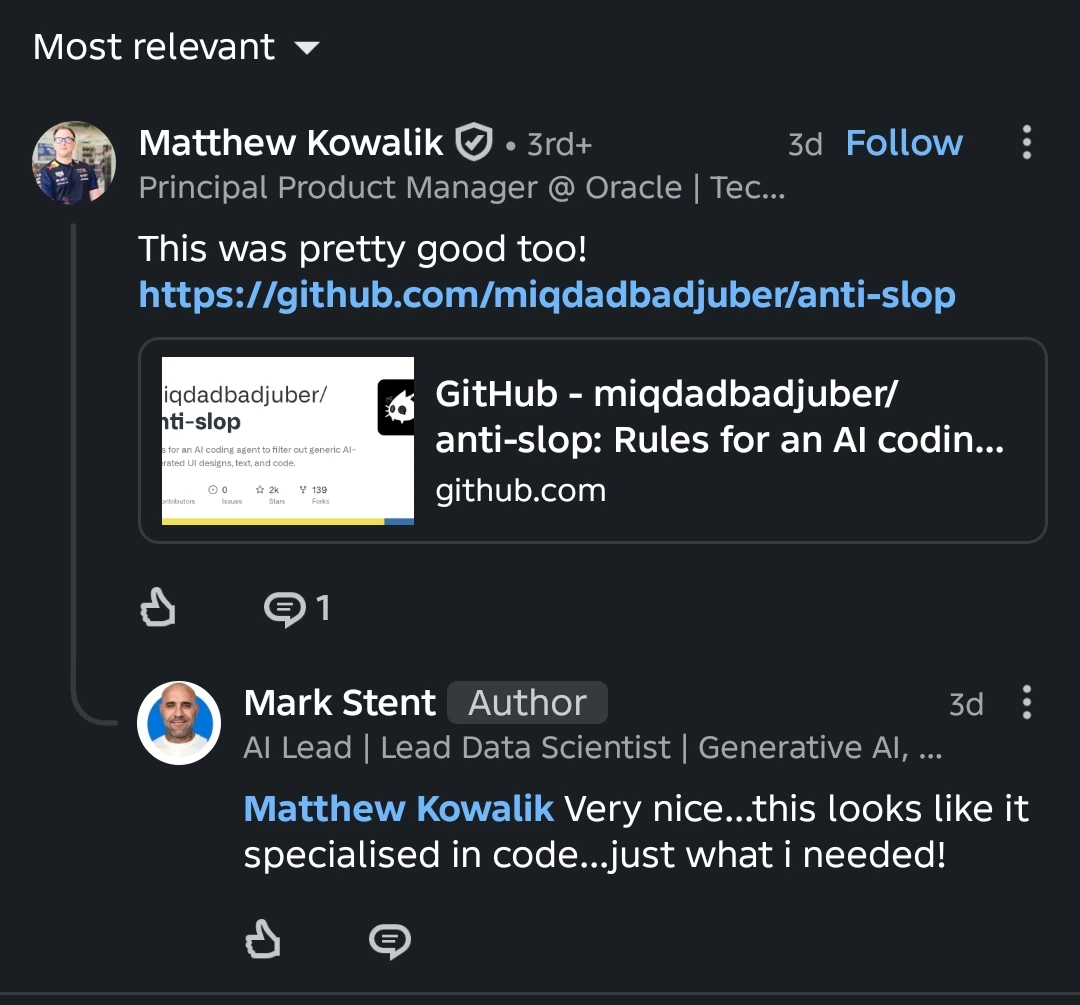
Discussion on LinkedIn: Matthew Kowalik (Oracle) sharing the repository with Generative AI Lead Mark Stent.
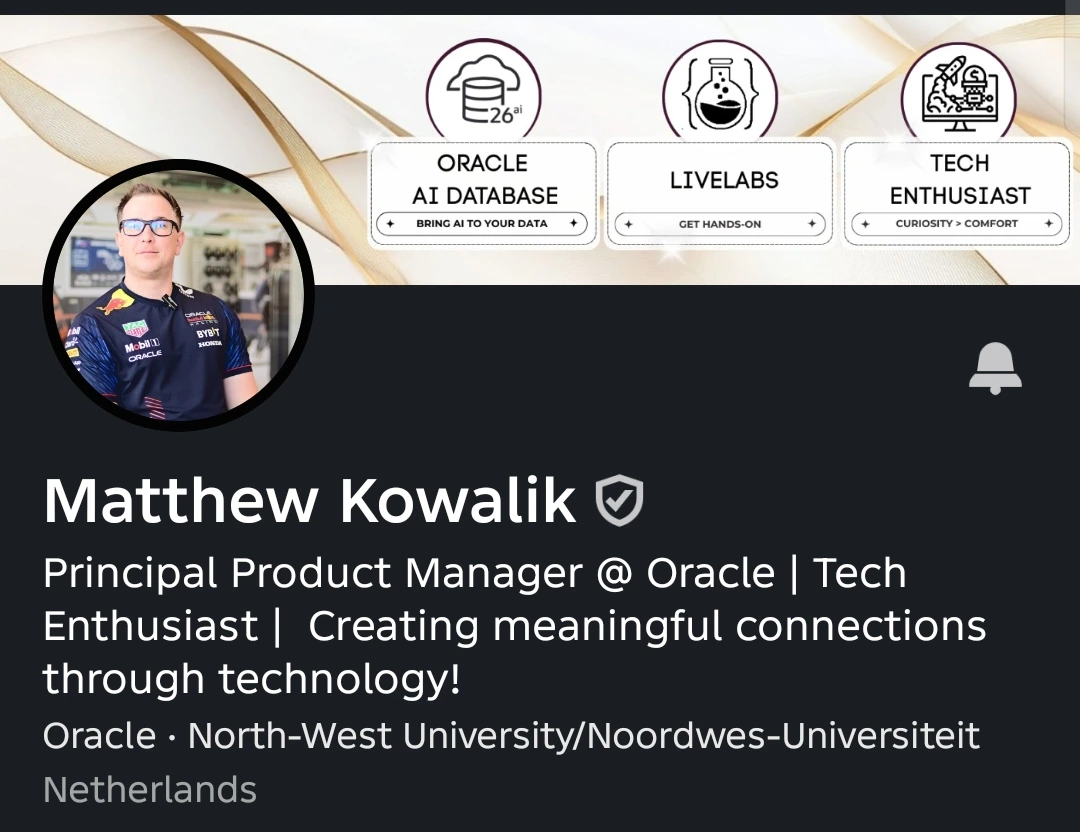
Matthew Kowalik, Principal Product Manager at Oracle.
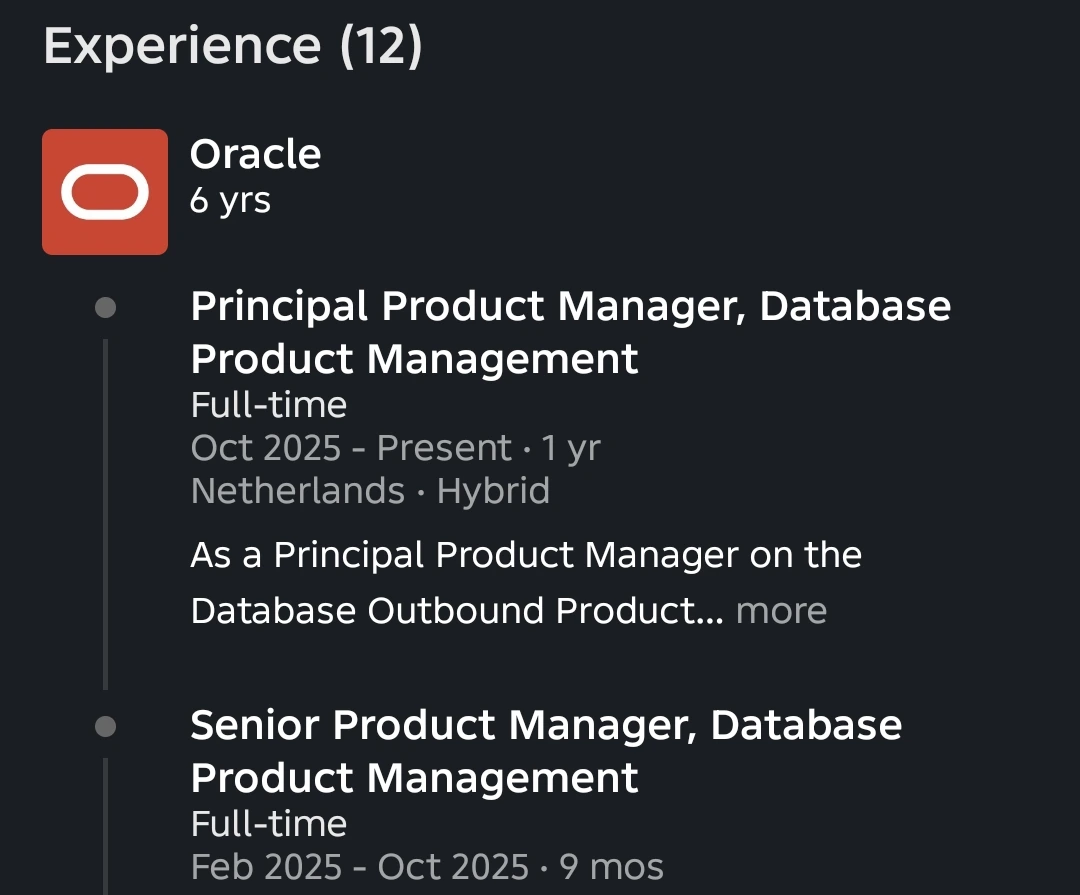
Six years at Oracle, leading Database Outbound Product initiatives.
Seeing engineers responsible for mission-critical enterprise systems find value in an open source coding agent ruleset was powerful confirmation. The frustration with AI-generated visual boilerplate is not limited to indie developers; it affects serious engineering teams building production software.
Ranked #55 in the Global AI Tools Directory
Following the initial organic discussions, independent curation platforms began indexing AntiSlop among the most impactful tools in the modern AI ecosystem. On Good AI List, AntiSlop ranked at #55 globally, situated directly between OpenAI Codex (#52) and Andrej Karpathy's Claude skills repository (#56).
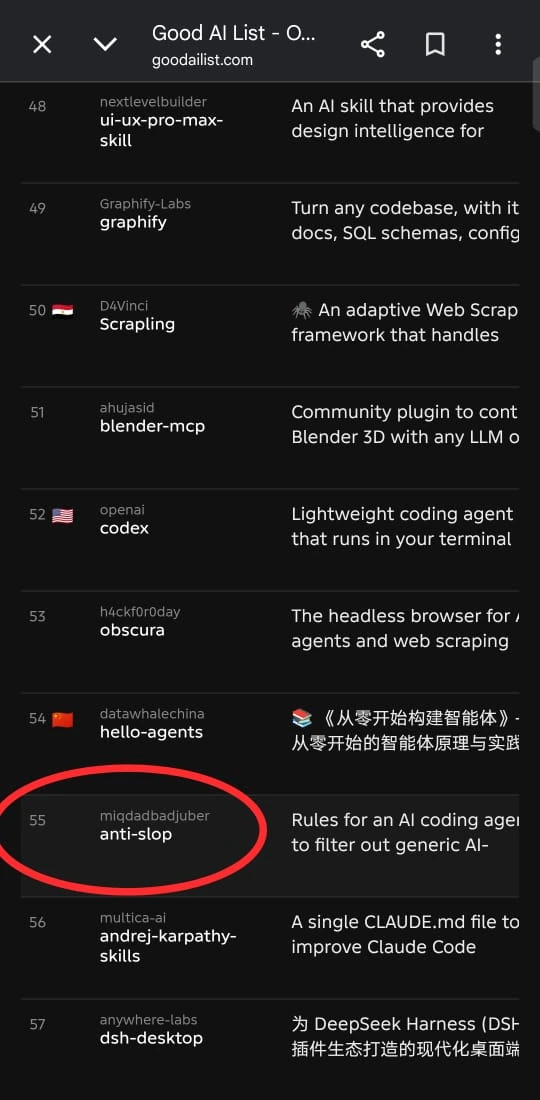
Good AI List: AntiSlop ranked #55 alongside OpenAI Codex (#52) and Andrej Karpathy skills (#56).
Standing in the same index alongside foundational developer tools from OpenAI and Andrej Karpathy demonstrated that deterministic styling rules had transitioned from a personal script into an essential utility for agentic workflows.
Statistical Momentum: The Hockey Stick Growth Trajectory
Once enterprise practitioners and AI tool curators shared the project, the repository metrics moved into an exponential phase. Developer tracking systems logged a sharp acceleration starting in early September, pushing star velocity past +112 stars every 24 hours.
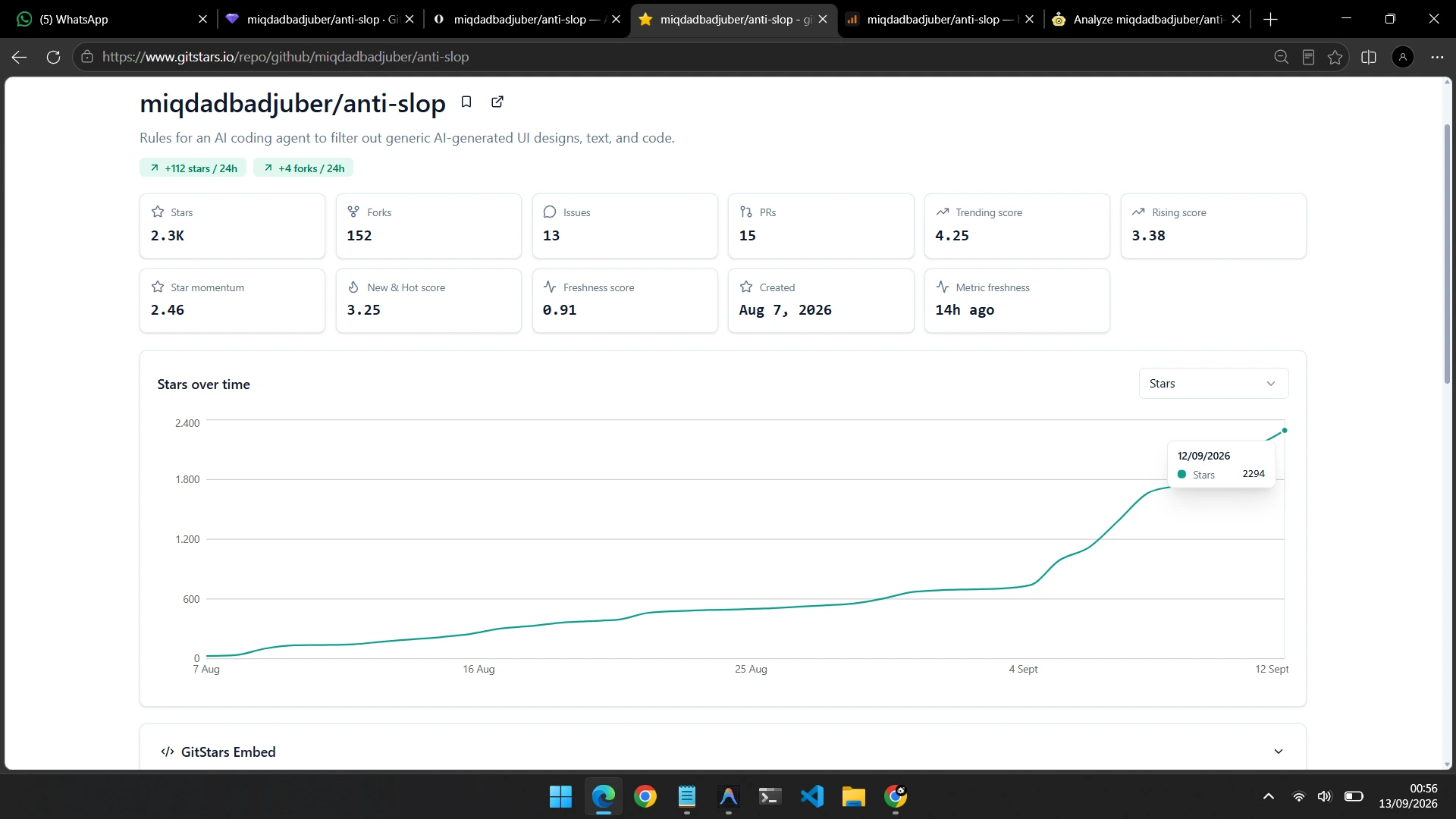
Trajectory tracked on GitStars: steep inflection point beginning early September, reaching 2,294 stars by September 12.
On RepoInsider, the project registered a Peak Pulse score of 99 out of 100, alongside a 5.7x daily spike in developer interest. This confirmed that developers were actively installing and integrating the rules rather than simply bookmarking the repository.
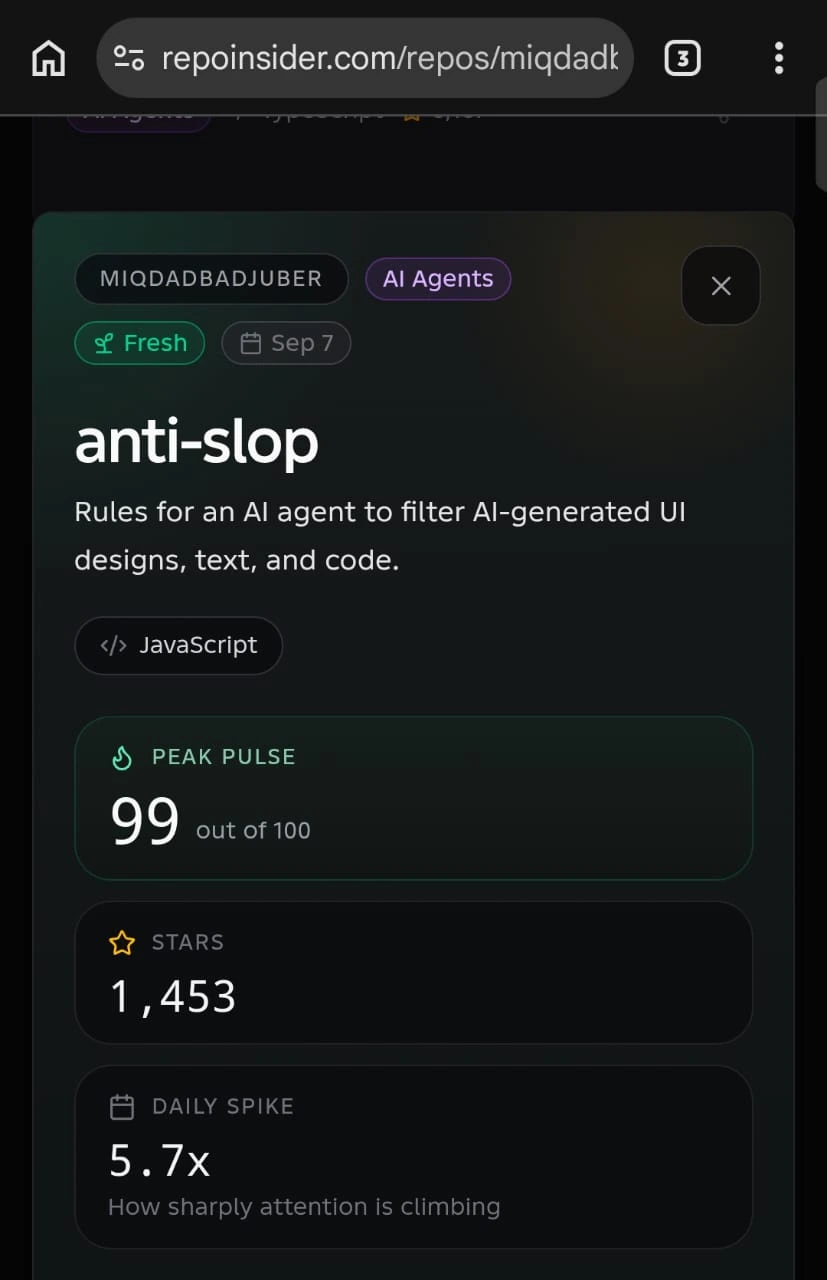
RepoInsider analytics: 99 Peak Pulse score and 5.7x daily acceleration in attention.
Featured Across Technology Platforms as a Trending Asset
As word spread across developer hubs, multiple technology tracking websites and open-source directories featured AntiSlop as one of the week's fastest-trending technology assets.
On GitGem, the project climbed to #69 trending overall (having reached a peak rank of #45 two weeks prior), recording +370 stars in a single monthly window, 152 forks, and climbing momentum on the global GitHub trending board.
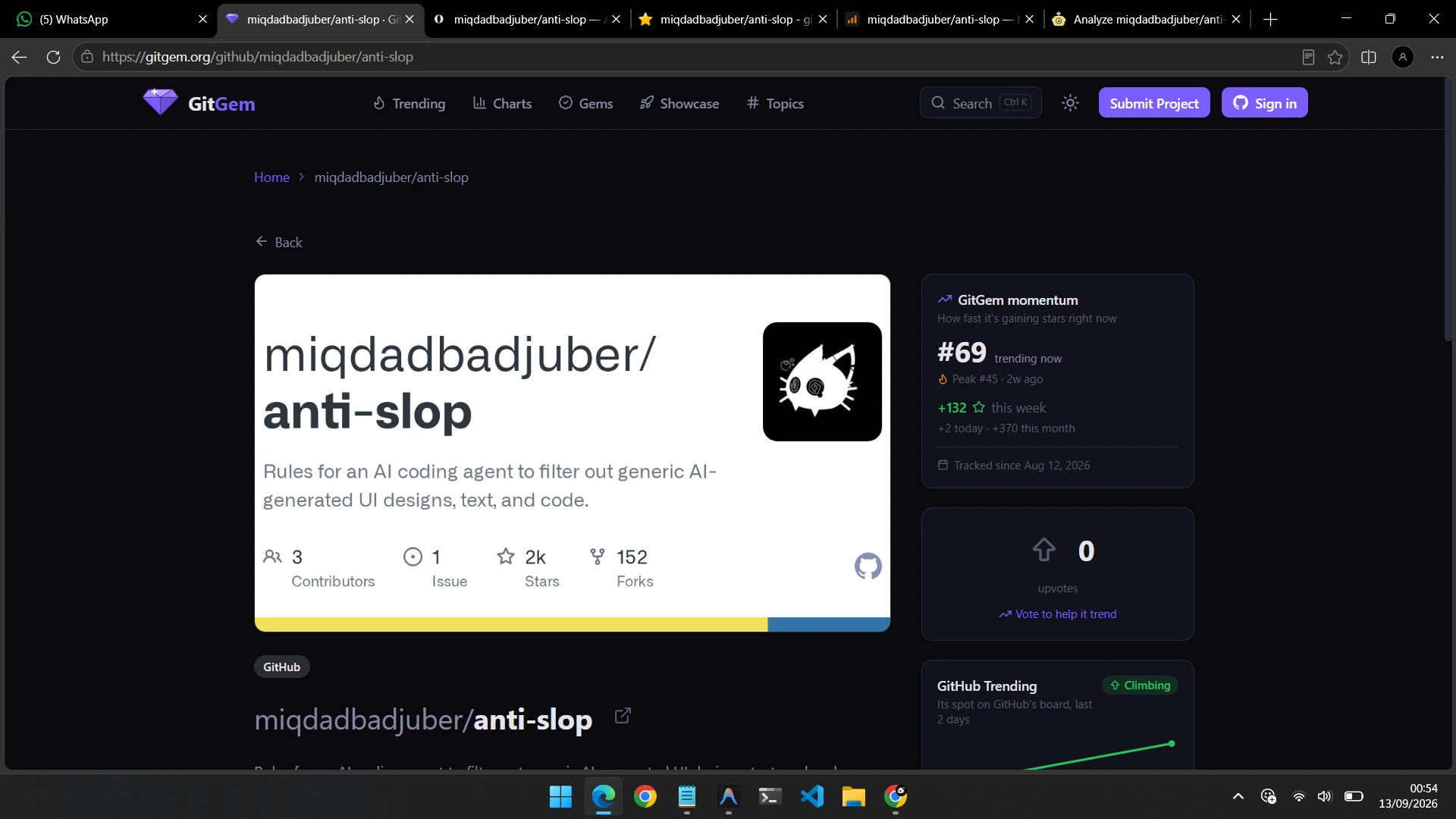
GitGem dashboard: climbing momentum, +132 stars in a single week, and 152 forks.
Technology aggregators highlighted the repository not just as another markdown configuration, but as a practical asset that engineering teams could immediately drop into Claude Code, Gemini CLI, Cursor, and Windsurf to guard against interface regressions.
To everyone who starred, forked, tested, and shared the project over the past month: thank you. Building an open source tool that resonated so quickly across the developer community has been an incredible experience, and keeping our code clean and intentional is work worth doing.